
Arriving successfully in Berlin
All about visa, residence permit, taxes, health insurance & co.
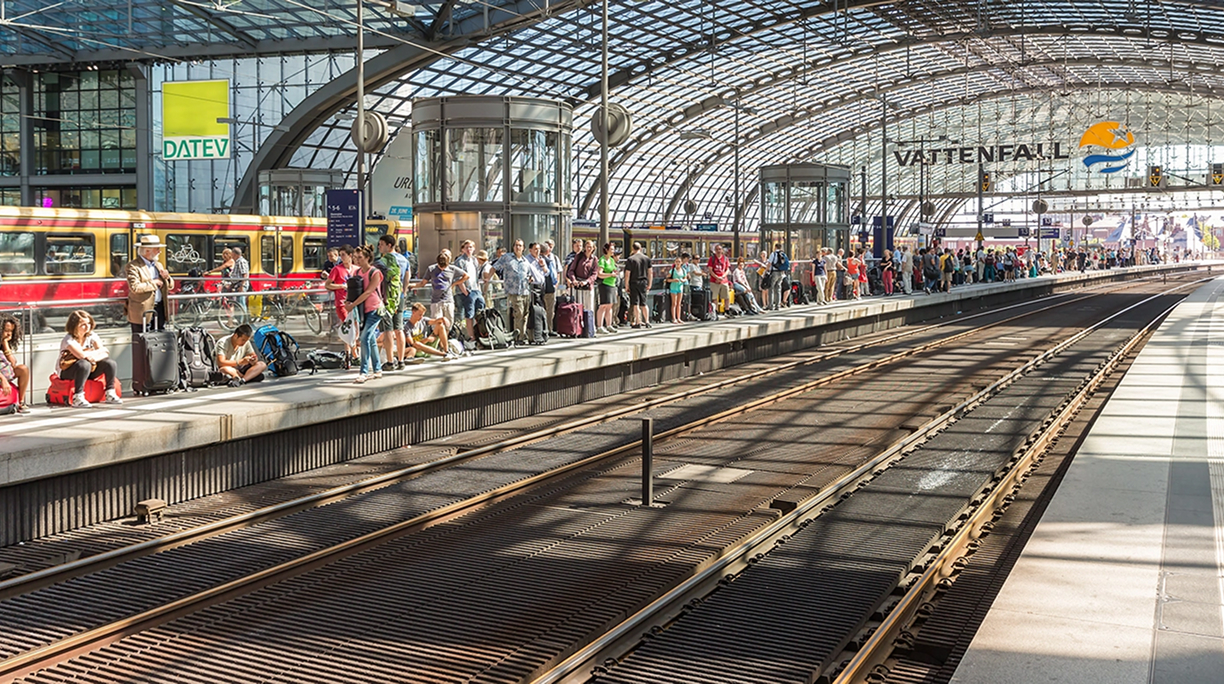
Arriving in Berlin
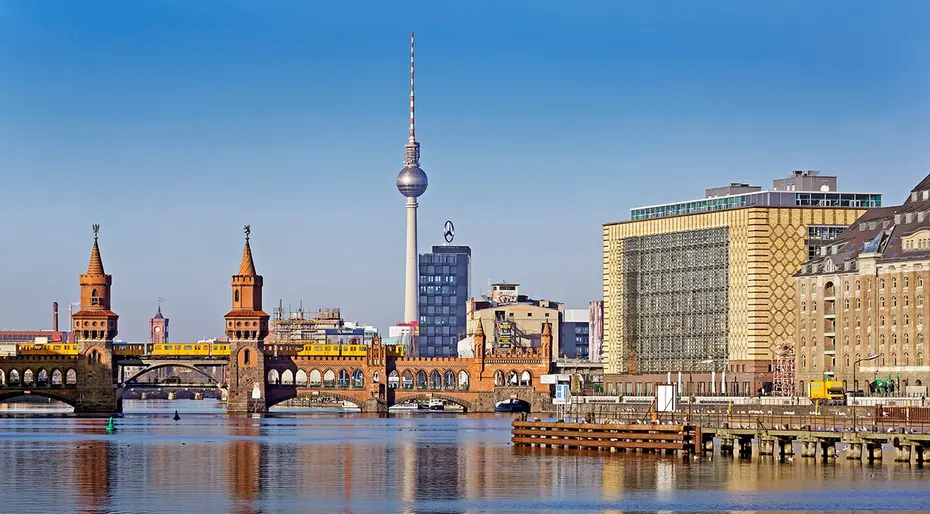
Berlin is an attractive city to work and live in. We support you in your arrival with information and tips on the topics of visa, residence permit, relocation and more.
Applying for a visa for your trip to Berlin
Whether or not you need a visa for Germany depends on your home nationality. You can find out if you need a visa to enter Germany via the website of the German Federal Foreign Office.
You must apply for your visa in your home country well before your entry into Germany. Submit your application to the German Embassy or Consulate General in your area. An application for a visa for employment must always be made jointly by both the employer and the employee.
OUR TIP
Check ahead of time to see which documents you’ll need to present when applying for a visa. This information can be found on the website of your diplomatic mission. This will save you the time needed to provide any additional requirements not initially submitted.
Citizens of the UK, United States, Canada, Australia, New Zealand, Israel, Japan and the Republic of Korea can travel to Germany without a visa and apply for a residence permit on-site before starting work. If you have any questions, please consult the local immigration office via the website. For EU citizens, the EU right of free movement applies to their residence.
OUR TIP
Did you know? If you apply to a Berlin company, your future employer can help you clarify immigration law issues. The Business Immigration Service (BIS) enables a fast and uncomplicated granting of residence permits for qualified specialists and entrepreneurs.
Duration and approval of the application for a national visa
If you are requesting to stay in Berlin for a longer period of time or for work, the processing of your application will take several weeks. The application is approved by different authorities:
- German Embassy (for highly qualified people with an employment contract in accordance with the Blue Card requirements)
- German Embassy and International Placement Services [Zentrale Auslands- und Fachvermittlung (ZAV)]
FAQ: Questions about the visa
Applying for a visa and a residence permit involves many questions. An overview of the most important questions and answers can be found here:
If you are not a citizen of the European Union and would like to work in Berlin, you need a residence permit that allows you to work.
The requirements for a residence permit for employment are a university degree recognized in Germany or formal vocational training recognized here and an employment contract with a Berlin employer.
Interns also require a corresponding residence permit. A distinction is made here between compulsory internships as part of a course of study and voluntary internships.
OUR TIP
There is a special rule for the IT sector: IT specialists from non-EU countries without a university degree but with at least three years of professional experience can be issued an EU Blue Card if they receive a salary of at least 43,759.80 euros per year (2025) in their new job.
The application for a national visa is always made jointly by the employer and the employee. The type of visa you need depends on your qualifications and circumstances. You apply for your visa before you enter Germany at the German diplomatic mission responsible for your place of residence - an embassy or consulate general.
Citizens of Australia, New Zealand, Israel, Japan, the Republic of Korea, the UK, Canada or the United States may enter Germany without a visa and apply for residence and work permits directly in Germany before starting work.
The application is approved by different authorities:
Abroad:
German Embassy and, if required, Central International and Specialized Services (ZAV, Zentrale Auslands- und Fachvermittlung)
In Germany:
Berlin Immigration Office (LEA) and, if required, the Federal Employment Agency
The decision as to whether applicants receive a Blue Card or a regular residence permit is made by the embassy or foreigners authority on the basis of the job profile and salary.
The EU Blue Card as a national visa
The Blue Card is a work and residence permit for highly qualified specialists from non-EU countries that paves the way to the European Union. The Blue Card is a residence permit that is used to show proof of legal residence in EU countries for nationals of non-EU countries for employment purposes. The Blue Card is thus intended for non-EU nationals.
For EU citizens, the EU right of free movement applies to their residence.
OUR TIP
If you are thinking about becoming a German citizen, it is best to first check without obligation whether you meet the necessary requirements. You can do this on the website einbuergerung.de. The website contains a quick online test as well as useful information that you will need for your citizenship application.
For the so-called MINT professions (scientists, mathematicians, engineers, doctors and computer scientists) and bottleneck professions (veterinarians, dentists, pharmacists, ICT managers, managers in production and logistics, nurses and obstetricians, teachers and educators), the minimum annual gross salary is 43,759.80 euros. In these cases, the approval of the Federal Employment Agency is required.
In order to obtain a regular residence permit for employment, qualified skilled workers with professional experience require a minimum annual gross salary of € 43,470. For professionals aged 45 and over, a minimum annual gross salary of €53,130 applies. In addition, the salary must correspond to the local market conditions for such a position.
Further information on the EU Blue Card and other residence permits can be found on the website of the Federal Office for Migration and Refugees and on the skilled workers portal “Make it in Germany”.
The application process can be faster. Spouses and family members can enter the country without any problems. A permanent residence permit can be applied for after just 27 months. If you have German language skills at level B1, you can apply for a permanent residence permit after just 21 months.
A national visa allows you to enter Germany - coupled with permission to take up the intended work. National visas are generally valid for twelve months. National visas (and Schengen visas) are issued by embassies and consulates abroad, and the German/Berlin immigration authorities will convert the national visa into a residence permit on application. It is therefore possible to work with a national visa if it contains a work permit.
Application via the Berlin Immigration Office:
If all the required documents are submitted, the application can be approved within nine to ten weeks.
Application via a German Embassy in a foreign country:
Depending on the number of applications at the respective embassy, processing times can vary between a few weeks to a few months. At some embassies, there may be a wait of several months for an appointment.
Fill out the applications carefully, especially the declaration of employment! Attach all required documents (employment contract, etc.) to the applications and only submit them completely.
When applying in Berlin: Employers can use the Business Immigration Service of the State Office for Immigration and the Berlin Economic Development Agency, Berlin Partner for Business and Technology GmbH.
Generally, residence permits for employment and EU Blue Cards are issued for four years. If the employment relationship is limited in time, the residence permit / Blue Card is valid for the duration of employment plus three months.
Extensions can be applied for in Berlin or the place of residence of the skilled worker.
Blocked account: a visa requirement for citizens of non-EU States
If you are coming to Berlin as a student, language student, jobseeker or intern from a non-EU country, it is quite possible that you will need a so-called blocked account. A blocked account is used to obtain a visa if you are entering the country without sufficient income. Sufficient funds must be deposited into the blocked account to ensure that your living expenses in Berlin are covered.
The process for opening and using a blocked account is easy, as you only have to carry out a few steps yourself. After applying for your blocked account, you must pay the entire blocked amount into the blocked account. Once you have done this, you can present the blocking confirmation to your German Foreign Office abroad.
The total amount to be paid in is based on the monthly funding from the Federal Training Assistance Act (BaföG) - in 2025 this is a maximum of 992 euros per month (11,904 euros per year). The blocked account remains blocked in favor of the Federal Republic of Germany until you enter the country. After that, a corresponding amount (usually 992 euros) will be paid out to your current account each month.
OUR TIP
In certain cases, other groups of people may also require a blocked account to obtain a German visa. Check with your embassy before you arrive as to whether this applies to you!
Residence Permit for Working Professionals
For EU citizens, the EU right of free movement applies to their residence. If you would like to stay in Berlin or Germany for more than three months, please register with a Berlin Bürgeramt office within 14 days of your arrival. Employment in a company in Berlin or Brandenburg does not pose any problems within the framework of the free movement of workers.
Citizens of the USA, Canada, Australia, New Zealand, Great Britain, Israel, Japan and the Republic of Korea can enter Germany without a visa. If you want to work in Berlin, you need a residence permit for employment or an EU Blue Card. You can apply for a residence permit at the Berlin Immigration Office (LEA, Landesamt für Einwanderung) within 90 days of entering the country. You may not begin working in Berlin until your residence permit has been issued.
You may therefore wish to apply for a national visa at the German Embassy and/or Consulate in your country of origin or country of permanent residence. This allows you to clarify, before travelling to Germany, whether or not you will be granted a residence permit in Berlin.
If you have travelled to Germany with a national employment visa, you may begin working as soon as you enter the country. Approximately two months before that visa expires, you have to apply to convert your national visa into a residence permit at the LEA (Berlin Immigration Office).
OUR TIP
University graduates and (visiting) scientists and researchers with an offer of employment in Berlin, as well as entrepreneurs and those who have founded a company can contact the Business Immigration Service. The service will support them by answering any questions they might have regarding residence permits.
Nationalities outside of the EU
The following applies to all other nationalities outside the EU: you will need a national/D-visa including permission to work in order to enter Germany. You can apply for this visa at the German Embassy or Consulate in the country you normally reside in. If you have travelled to Germany on such a visa, you must apply to the Berlin Immigration Office (LEA) to convert your visa into a resident permit approximately eight weeks before the visa expires.
If you already possess a different type of German residence permit, you may have to check whether or not this permit allows you engage in the type of employment you have planned. In this case, your employer can also contact the Business Immigration Service for more information.
OUR TIP
Your future employer in Berlin can in certain cases, before you enter the country as a foreign skilled worker, clarify in a preliminary approval process whether or not the Federal Employment Agency will grant permission for you to be employed for the job in question. If preliminary approval is granted, it is valid for six months.
OUR TIP
You need a work permit for Berlin? Please read the interview with our expert Marion Schönicke published in the Kenjo Blog! The most important questions about the topic will be answered here.
OUR TIP
If you are thinking about becoming a German citizen, it is best to first check without obligation whether you meet the necessary requirements. You can do this on the website einbuergerung.de. The website contains a quick online test as well as useful information that you will need for your citizenship application.